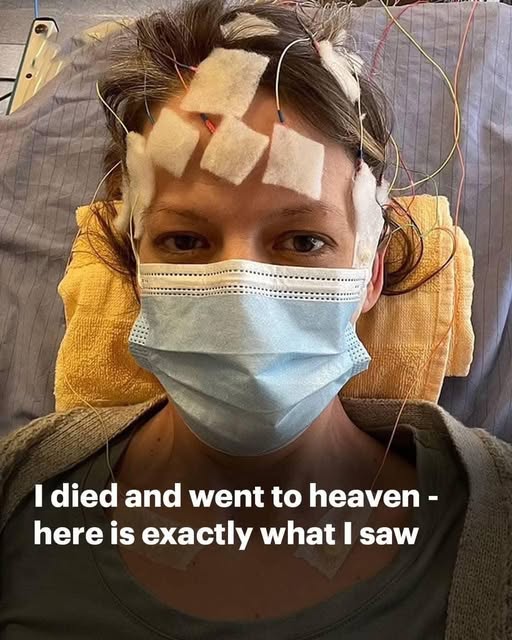
Across cultures and religions, humans have long asked what comes after death, whether it is paradise, reincarnation, or an unknowable void. Science continues to explore consciousness, yet no definitive explanation exists. Amid this uncertainty, stories of near-death experiences (NDEs) provide a deeply personal perspective, blending the spiritual and the psychological in ways that resonate across generations. Such testimonies illuminate the human longing for connection, meaning, and reassurance, offering glimpses of light in moments when life seems most fragile. They remind us that the boundary between life and death is not only physical but profoundly reflective, provoking insight, transformation, and renewed purpose.
Julie Poole, a British author and spiritual teacher, is one such voice whose story has inspired readers worldwide. Her journey began amid profound suffering, having endured severe abuse during childhood. She describes these experiences as a crucible, shaping her spiritual sensibilities and fostering resilience that would carry her into adulthood. For Poole, life was a canvas painted with trauma, but also a space for seeking understanding, healing, and connection. Her subsequent work emphasizes that confronting darkness can catalyze a spiritual awakening, demonstrating that suffering and insight are often intertwined in the human experience.
In her twenties, Poole faced a crisis that would alter the trajectory of her life. Following a suicide attempt, she recounts a near-death experience that lasted six minutes, a passage she describes as entering a radiant, peaceful “spirit realm.” There, she met beings of light—angels, in her interpretation—who conveyed that her time had not yet come. Upon regaining consciousness three days later, she retained vivid memories of this extraordinary journey. The experience was transformative: it provided her with a sense of calm, purpose, and a renewed commitment to life. For Poole, the encounter was not merely metaphorical; it shaped her understanding of existence, morality, and the potential for human evolution.
Central to her account is a vision of a forthcoming “Golden Age,” a period roughly spanning 2012 to 2032, in which humanity would collectively awaken to greater moral clarity, equality, and compassion. She interprets this as a time of reckoning for corrupt systems and a rise of leaders guided by conscience rather than self-interest. Whether taken literally or symbolically, Poole’s vision underscores a universal theme: near-death experiences often intensify a longing for justice, truth, and purpose. They prompt reflection on personal and collective responsibility, inspiring a deeper engagement with life beyond survival.
Poole’s story resonates because it bridges personal suffering with universal aspiration. Her encounter in the spirit realm is not merely an individual revelation; it speaks to shared human experiences of hope, renewal, and ethical awakening. Across centuries and cultures, NDE accounts reflect similar motifs—light, beings of guidance, and the reassurance that life’s conclusion may not be final. These narratives provide comfort, provoke introspection, and encourage the living to consider the quality, intention, and meaning of their own existence. Poole’s testimony, framed by resilience and recovery, highlights the potential for personal growth emerging from near-fatal crises.
Ultimately, her experience reminds us that life, even in its most fragile moments, holds opportunities for transformation and insight. The afterlife, whether understood literally or as symbolic language, serves as a mirror for human values, aspirations, and the pursuit of purpose. Poole’s six-minute journey invites reflection on mortality, compassion, and the latent potential for collective awakening. It suggests that what is often called “afterlife” may be less a destination than a lens through which the living can reevaluate priorities, embrace hope, and cultivate meaning in a world where human resilience continually seeks the light.