The shift did not arrive with spectacle or sound bites, but through process—forms filed, audits reopened, and questions that refused to remain abstract. For years, Minnesota’s public image rested on a sense of institutional trust, built from civic pride, progressive policy branding, and the belief that good intentions translated naturally into good governance. That confidence was tested when federal authorities intensified scrutiny of state-administered programs, reopening files that many assumed were settled and reviewing funding streams long treated as routine. The move was not isolated to a single agency or initiative; it spread across childcare assistance, food programs, pandemic-era relief, and nonprofit grant management. What emerged was not a single scandal but a broader examination of oversight itself—how systems were designed, how compliance was verified, and whether accountability mechanisms had kept pace with the scale and speed of modern public spending. The attention forced Minnesota to confront a difficult question: whether reputation had quietly replaced verification.
As the reviews deepened, the political environment sharpened. National leaders framed the scrutiny as a necessary correction, arguing that programs grounded in compassion must also be built to withstand abuse. State officials countered that federal actions risked disrupting services to vulnerable families and were being used to score political points. In between those positions sat the practical reality of governance: grants paused pending documentation, contractors asked to justify expenditures, and agencies required to produce records that, in some cases, had never been standardized. Investigators focused less on rhetoric and more on controls—who signed off on payments, how vendors were vetted, and whether warning signs had been ignored. The process revealed uneven oversight and, in some instances, structural weaknesses that made misuse possible even without overt criminal intent. The result was an uncomfortable blend of administrative failure, human consequence, and political theater, each feeding the other.
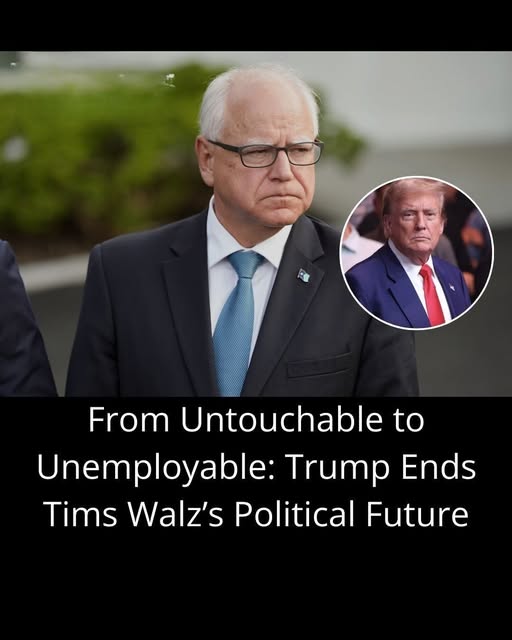
Against this backdrop, Governor Tim Walz announced he would not seek another term. The decision was framed as personal and pragmatic, a choice to step aside amid an increasingly polarized environment. Yet timing matters in politics, and the announcement inevitably became part of the larger narrative. Supporters argued that ongoing investigations did not equate to personal wrongdoing and cautioned against conflating administrative shortcomings with intent. Critics saw the decision as an acknowledgment of mounting pressure and unresolved questions. What neither side could deny was that the moment marked a transition—from campaign rhetoric to institutional review, from messaging to documentation. Leadership changes do not halt audits, and elections do not close files. The machinery of oversight moves at its own pace, indifferent to legacy or ambition, and Minnesota found itself navigating that reality in real time.
The human dimension of the scrutiny proved harder to manage than the political one. As funding reviews proceeded, community organizations worried about interruptions to services, families feared delays, and small providers questioned whether they could survive prolonged uncertainty. These concerns highlighted a central tension: accountability measures, while necessary, can have immediate downstream effects when systems are interdependent. Federal officials emphasized that reviews were designed to protect beneficiaries by ensuring funds reached their intended recipients. State leaders stressed the risk of collateral damage when payments were paused broadly rather than surgically. The debate underscored a deeper issue—how to design oversight that is both rigorous and responsive, capable of detecting misuse without destabilizing legitimate operations. It also exposed how quickly moral framing can complicate practical governance, turning technical audits into symbols of ideological conflict.
As findings accumulated, the conversation widened beyond Minnesota. Other states watched closely, recognizing familiar pressures in their own systems: rapid expansion during emergencies, reliance on intermediaries, and compliance frameworks stretched thin by urgency. The lesson was not that any single state was uniquely flawed, but that modern public administration demands constant recalibration. Oversight cannot be episodic; it must be continuous, resourced, and insulated from both complacency and partisanship. The Minnesota experience illustrated how trust, while valuable, cannot substitute for verification, and how programs designed to help the vulnerable must be engineered to resist exploitation. It also demonstrated the risks of assuming that a positive public image provides immunity from scrutiny. In an era of heightened federal attention and constrained budgets, reputations are provisional, earned repeatedly through evidence rather than inherited through branding.
What remains is a choice about what follows scrutiny. States can retreat into defensive narratives, framing oversight as hostility and reform as concession, or they can treat the moment as an opportunity to strengthen systems and rebuild confidence on firmer ground. For Minnesota, the path forward involves clarifying standards, improving data transparency, and aligning compassion with control so that empathy is expressed through effectiveness rather than assumption. The national debate will continue, shaped by elections and ideology, but the quieter work of reform will matter more in the long run. Accountability, when applied consistently, is not a punishment; it is a prerequisite for trust. Whether this moment becomes a turning point or a missed opportunity will depend less on who claims victory and more on whether institutions emerge better prepared to deliver on their promises.