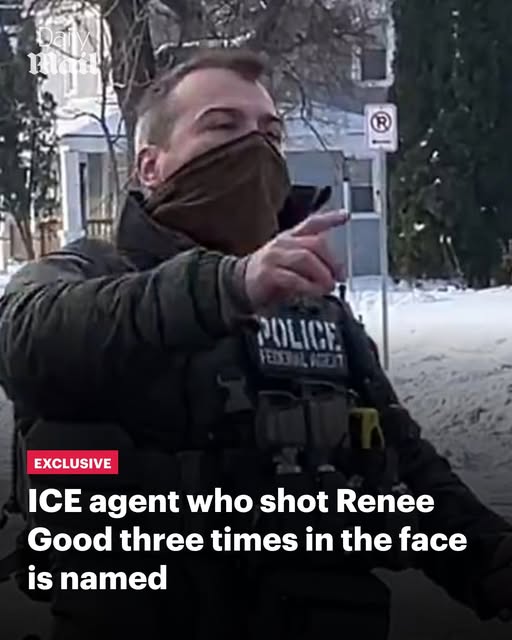
The city of Minneapolis continues to grapple with the shock and grief following the fatal shooting of 37-year-old poet, writer, and mother Renee Nicole Good by U.S. Immigration and Customs Enforcement agent Jonathan “Jon” Ross in early January 2026. Good, a deeply respected member of her community, was seated in her SUV when Ross fired multiple shots, ending her life in what federal authorities have described as a necessary use of lethal force. Video footage of the incident has circulated widely, prompting heated debates across local and national platforms about the justification of Ross’s actions and the broader implications for federal enforcement in urban communities. While authorities maintain that Good posed an immediate threat to officer safety, civil rights advocates, local officials, and residents have called for a careful and transparent review, highlighting concerns that the available footage does not clearly support the claim that lethal force was required. The tragic incident has catalyzed public outrage and renewed scrutiny of ICE practices, raising profound questions about accountability, training, and the protocols governing high-pressure encounters between federal officers and civilians.
The personal life and character of Renee Nicole Good stand in stark contrast to some of the descriptions put forward by officials aligned with the federal administration. While some reports attempted to label her as a “professional agitator,” those who knew Good have consistently disputed that characterization, describing her as a devoted parent, a talented poet, and an engaged member of her community. Good and her wife, Rebecca, had recently returned to Minneapolis after briefly leaving the United States following the 2024 election, seeking stability, safety, and a supportive environment to continue their family life. Friends and neighbors remember Good as someone committed to fostering connection and creativity, rather than participating in organized protests or political agitation. The discrepancy between official narratives and local recollections has intensified public debate, fueling protests, vigils, and calls for rigorous investigation into both the circumstances of her death and the broader conduct of federal immigration agents operating in local jurisdictions.
Jonathan Ross, the ICE agent involved in the shooting, brings a complex professional history to the case. Approximately six months before the fatal encounter, Ross sustained serious injuries after being dragged by a vehicle during an unrelated arrest, an incident that required substantial medical treatment and recovery. Federal investigators are examining whether this prior trauma may have affected his perception of threat during the encounter with Good, raising critical questions about how stress, physical injury, and past experiences influence decision-making in law enforcement. While authorities emphasize that no conclusions have been drawn regarding culpability, the consideration of these factors is part of a growing awareness within policing that trauma and high-pressure situations can significantly impact judgment. The investigation aims not only to determine the immediate causes of the shooting but also to assess broader implications for training, oversight, and support for federal officers tasked with operating in complex urban environments.
Multiple investigations at both federal and state levels remain ongoing, encompassing the review of video footage, witness testimony, forensic evidence, and operational protocols. Authorities are seeking to reconstruct the precise sequence of events, analyzing each decision, movement, and action taken during the encounter. Experts in law enforcement and civil rights have emphasized the importance of transparency, accountability, and independent oversight, noting that cases involving federal officers carry significant weight in shaping public perceptions of fairness and justice. Community members have expressed frustration at what they perceive as a slow response and lack of clarity, pointing to historical instances where similar incidents have resulted in minimal consequences for officers. Meanwhile, Good’s family continues to navigate profound grief while seeking answers about the circumstances of her death, reflecting the deep human cost when encounters between law enforcement and civilians result in loss of life.
The broader social and political ramifications of Good’s death have sparked a national conversation about ICE operations, use-of-force standards, and the responsibilities of federal agents within local communities. Public debate has intensified over the balance between enforcing federal immigration law and respecting civil liberties, with critics arguing that aggressive tactics often escalate rather than resolve potentially dangerous encounters. Local leaders and civil rights organizations have called for reforms, including trauma-informed policing, enhanced oversight, and clearer guidelines to prevent unnecessary fatalities. At the same time, federal officials, including those from the Trump administration, have defended ongoing ICE operations, asserting that enforcement duties will continue despite public opposition and protests. The case has thus become a flashpoint, highlighting tensions between federal authority and community trust, and illustrating the challenges of maintaining accountability while ensuring officer safety in dynamic urban contexts.
For Renee Nicole Good’s family and the Minneapolis community, the incident represents more than a single tragedy; it underscores systemic issues in federal enforcement and policing culture. The incident has reignited debates over officer training, the psychological toll of law enforcement, and the mechanisms in place to prevent unnecessary loss of life. It has also prompted broader discussions about public trust, transparency, and the need for policies that prioritize de-escalation and community engagement. While the legal and procedural investigations continue, the human impact of Good’s death remains profound, leaving her family and the city to mourn while demanding accountability. The incident serves as a sobering reminder of the consequences of lethal force, the need for clear operational standards, and the critical importance of balancing the enforcement of federal law with the preservation of human life and community cohesion. As the nation watches, the outcome of these investigations may shape policies, perceptions, and the future conduct of ICE agents across the country, while Renee Nicole Good’s memory serves as a lasting testament to the complex interplay of law enforcement, accountability, and human tragedy.