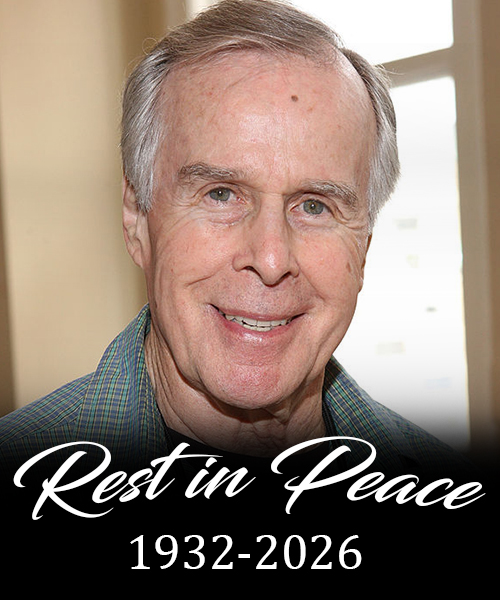
Actor John Cunningham — the steadfast character performer whose calm authority and unmistakable presence became familiar to generations of theatergoers and film audiences — has died at the age of 93, bringing to a close a career that stretched across nearly seven decades and embodied the very idea of the working actor. Cunningham passed away peacefully Tuesday morning at his longtime home in Rye, New York, overlooking the 11th hole of the Rye Golf Club, with family by his side. His death marks not only the loss of a prolific performer, but the passing of a figure who represented discipline, humility, and devotion to craft in an industry often defined by fleeting visibility. Known for his belief that acting was not about recognition but repetition and growth, Cunningham once said that the true pleasure of theater was the chance to “do it again, and again, and again,” constantly refining the work. That philosophy guided a life in which he appeared everywhere without ever demanding attention, leaving behind performances that felt grounded, intelligent, and deeply human.
Cunningham’s name may not have carried marquee-level celebrity, but his Broadway résumé stands as a quiet monument to American theater history. Over the course of his career, he appeared in 15 Broadway productions, taking part in shows that defined eras rather than trends. His credits included Company, Cabaret, Zorba, 1776, Titanic, The Sisters Rosensweig, and Six Degrees of Separation, among others. He originated the role of Flan Kittredge in Six Degrees of Separation during its acclaimed Broadway run from 1990 to 1992, later reprising the role in the 1993 film adaptation. Whether portraying authority figures, intellectuals, or conflicted patriarchs, Cunningham brought precision without stiffness and warmth without sentimentality. His final stage appearance came in 2012, when he was 80 years old, in Painting Churches — a fitting closing chapter to a theatrical journey that had begun long before fame ever entered the picture and ended only when he chose to step away.
The remarkable nature of Cunningham’s career becomes even clearer when looking at how it began. In 1960, at just 27 years old and before signing with an agent, he was cast by legendary director Moss Hart as Zoltan in the national and international tours of My Fair Lady, while also serving as understudy to Henry Higgins. It was an extraordinary entry into the profession, placing him immediately within one of the most prestigious productions of its time. From that moment forward, Cunningham built his life around the stage, not chasing stardom but steadily earning respect. He understood theater as a living, breathing practice — one that required presence, patience, and preparation. Those who worked alongside him often remarked on his reliability and seriousness, qualities that made him invaluable to directors and fellow actors alike. In a profession filled with uncertainty, Cunningham became someone productions could depend on.
While theater remained his artistic home, Cunningham’s face and voice became widely known through film. Movie audiences remember him vividly as the conservative, protective father in Mystic Pizza and as the stern yet quietly loving parent of Ethan Hawke’s character in Dead Poets Society. He appeared in a wide range of films, including School Ties, For Love or Money, Nixon, The Jackal, Shaft, and Roommates, often cast as executives, judges, fathers, or authority figures. Yet within those familiar outlines, he consistently found room for nuance, revealing vulnerability beneath restraint and moral complexity beneath control. He also contributed memorable voice work, including the satirical “How to Be a Man” tape in In & Out and the Fed Net announcer in Starship Troopers. In 1986, The New York Times described him as “ever-reliable and ever-employed,” a phrase Cunningham reportedly cherished, as it perfectly captured his sense of purpose. Despite decades of steady success, he often joked that he had “never worked a day” in his life.
Born on June 22, 1932, and raised in New Paltz, New York, Cunningham was the son of a high school principal and developed an early respect for education and discipline. After graduating from Dartmouth College, he joined the U.S. Army, where an unexpected reassignment placed him in an acting troupe that performed for American troops stationed across Europe. That experience confirmed his calling and shaped his understanding of performance as service. Following his military service, he earned a master’s degree from Yale Drama School, one of the most rigorous training grounds for actors in the country. There, he formed lifelong friendships, including with Dick Cavett, before heading to New York to build a career from the ground up. Television soon became another steady outlet for his talents, with appearances on Law & Order — eight times — as well as 30 Rock, The Good Wife, Damages, and numerous daytime dramas, where his presence lent credibility and gravity to every role.
Beyond his professional achievements, Cunningham was deeply invested in the life of his community. In Rye, New York, he was known not just as an actor, but as a neighbor, mentor, and advocate for the arts. In 1989, alongside fellow actor Frances Sternhagen, he co-founded the Playwrights and Players series, bringing distinguished playwrights and performers to Rye High School while raising funds for arts education. The initiative reflected his belief that theater mattered not only on Broadway, but in classrooms and local communities. At home, he was a devoted husband, father, and grandfather. He is survived by his wife of nearly 70 years, Carolyn Cotton Cunningham — a former Rye City Council member and environmental advocate — who held his hand as he passed, as well as their children, Christopher, Catherine, and Laura, six grandchildren, two great-grandchildren, and his longtime caregiver. John Cunningham’s life stands as a testament to what it means to endure with grace: to show up, do the work, serve the story, and leave behind a legacy built not on fame, but on integrity.