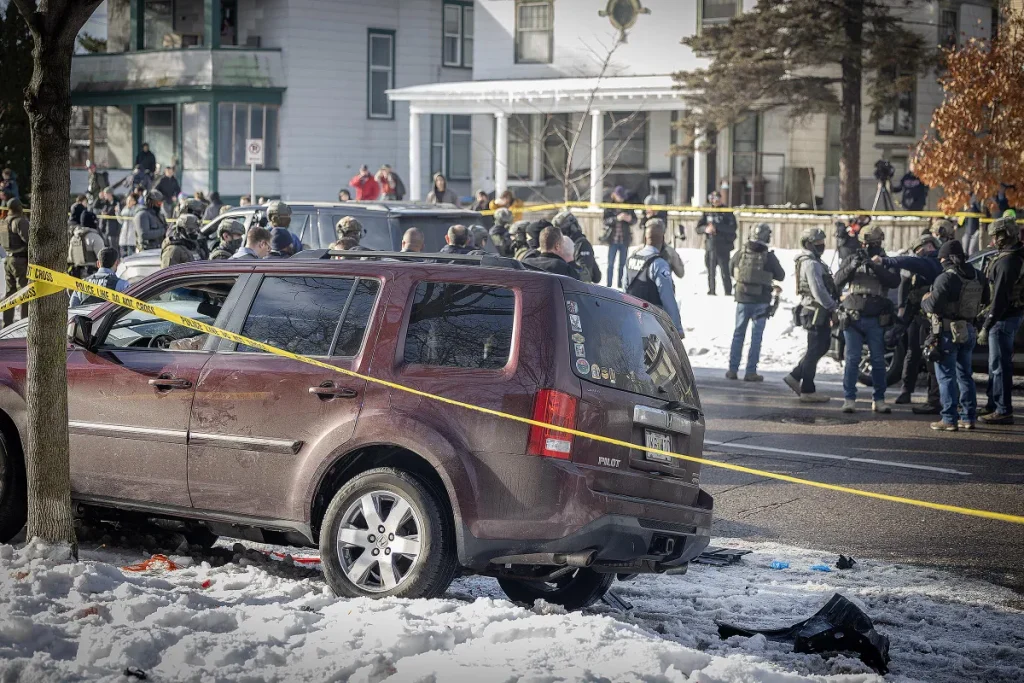
A tragic confrontation between federal immigration authorities and a Minneapolis resident ended in death on January 7, 2026, drawing national attention and renewed scrutiny of U.S. Immigration and Customs Enforcement (ICE) operations. Renee Nicole Good, a 37-year-old mother, poet, and active community member, was fatally shot during a preplanned enforcement action in the Powderhorn Park neighborhood. Federal officials assert that the woman drove her vehicle toward ICE agents, prompting the use of lethal force. Multiple video angles captured the chaotic moments, showing the SUV maneuvering near officers before gunfire erupted, though interpretations of the footage vary widely. The incident has raised urgent questions about when and how federal officers are authorized to use deadly force in residential communities and how local authorities are informed of such operations.
Federal agencies, including ICE and the Department of Homeland Security, maintain that the agent’s actions were consistent with federal training and use-of-force protocols. Officials claimed the vehicle was used as a weapon, endangering officers’ lives, and emphasized that no ICE personnel suffered serious injuries during the encounter. Yet video evidence and witness accounts have prompted skepticism from local leaders, legal experts, and residents, some of whom argue the shooting may have been avoidable. The Minneapolis mayor, city council members, and community advocates have called for transparency, demanding access to all body-camera and surveillance footage to determine the sequence of events and evaluate whether the response was proportionate. This tension between federal assertions and local observation has intensified debate over federal jurisdiction, community safety, and oversight.
Community response was immediate and fervent. Protesters gathered near the scene, carrying signs honoring Good’s life and calling for accountability in federal enforcement practices. Faith leaders, neighbors, and city officials visited the site to express grief and solidarity with Good’s family, emphasizing her role as a caring mother and community figure. Family members have described her as compassionate, devoted, and engaged in creative work, including award-winning poetry and writing that reflected her experiences as a wife, mother, and member of the LGBTQ+ community. Public mourning has highlighted both the human cost of the shooting and broader concerns about ICE operations in populated urban areas.
Investigations into the incident are ongoing. The FBI and the Minnesota Bureau of Criminal Apprehension are reviewing video evidence, forensic data, and officer statements to determine whether the use of deadly force complied with federal law and internal ICE protocols. Key questions under examination include the vehicle’s speed, proximity to officers, and whether alternative non-lethal measures could have been employed. The process is expected to be meticulous and lengthy, with officials cautioning against premature conclusions. Pending releases include full body-camera footage, a detailed event timeline, and potential criminal or administrative proceedings, all of which will shape public understanding and policy implications for future federal enforcement actions.
The tragedy has reignited a national conversation over the role of ICE, especially in urban neighborhoods where large-scale operations can intersect unpredictably with civilians. Advocates for reform argue that the federal presence in residential areas, particularly without prior coordination with local authorities, poses unnecessary risks to both residents and law enforcement personnel. Critics contend that aggressive enforcement tactics may exacerbate mistrust, creating tension between community members and federal agents and undermining public safety. Supporters of ICE operations maintain that officers face unpredictable dangers and must respond decisively to perceived threats. This case underscores the challenges of balancing the legal authority of federal agencies with ethical obligations, community trust, and oversight mechanisms designed to protect lives.
Beyond immediate concerns, the death of Renee Nicole Good has symbolic weight, illustrating the human consequences of high-stakes immigration enforcement. Her story has prompted calls for policy review, independent oversight, and reevaluation of protocols governing encounters with civilians in densely populated areas. Legal scholars, civil rights groups, and local leaders emphasize that while enforcement of immigration laws is a federal responsibility, it must be conducted with transparency, accountability, and sensitivity to the communities affected. As the investigation proceeds, the incident may influence future discussions on federal operations, use-of-force standards, and urban policing, highlighting the fragile line between enforcement, safety, and civil rights in the United States.