Jewelry often carries far more value than the metal from which it is made. A ring passed down from a grandparent, a bracelet received on a special birthday, a favorite necklace worn every day, or a pair of earrings purchased during a memorable trip can all hold sentimental significance that grows over time. Yet even the most cherished jewelry faces a common problem: tarnish.
Many people become discouraged when they notice their once-brilliant pieces developing a dull appearance. Silver darkens. Brass loses its golden glow. German silver becomes cloudy and gray. Even gold-filled jewelry can appear less vibrant after prolonged exposure to daily wear.
The immediate assumption is often that professional cleaning is necessary. Others spend significant amounts of money on specialty cleaning products advertised as miracle solutions. While those options may work, they are frequently unnecessary.
One of the most effective jewelry-cleaning methods can be created at home in less than ten minutes using ingredients that many people already have in their kitchens.
The technique relies on a simple scientific process rather than harsh scrubbing or expensive chemicals. When performed correctly, it can safely remove tarnish, restore shine, and help jewelry look remarkably refreshed.
The best part is that it requires minimal effort and costs only a fraction of commercial cleaning products.
Why Jewelry Loses Its Shine
To understand why this cleaning method works so well, it helps to understand what causes tarnish in the first place.
Many metals react naturally with substances found in the environment. Oxygen, sulfur compounds, humidity, skin oils, perfumes, lotions, hairsprays, and cleaning products all contribute to changes on the metal’s surface.
Sterling silver is especially susceptible because sulfur compounds in the air bond with the metal, creating a dark layer commonly known as tarnish.
Brass experiences oxidation that causes discoloration and dullness.
German silver, despite its name, contains no actual silver and often develops a gray or yellowish appearance as it ages.
Gold-filled jewelry generally resists tarnish better than silver, but dirt, oils, and environmental exposure can still reduce its brilliance.
These changes occur gradually, often going unnoticed until jewelry suddenly appears much older than it actually is.
Fortunately, much of this tarnish exists only on the surface and can be removed safely.
The Household Ingredients You Need
The cleaning solution requires only a handful of common items:
- 1 tablespoon baking soda
- 1 tablespoon salt
- 1 cup very hot water
- A few drops of liquid dish soap
- Aluminum foil
- A heat-safe bowl
- A soft cloth for drying
Most households already have these ingredients available, making this method both convenient and economical.
The Science Behind The Method
What makes this approach so effective is the chemical reaction created between the aluminum foil and the tarnished metal.
When hot water, salt, and baking soda combine, they form an electrolyte solution.
The aluminum acts as a sacrificial metal.
Instead of scrubbing tarnish away mechanically, the reaction transfers sulfur compounds from the jewelry onto the aluminum foil.
Essentially, the tarnish leaves the jewelry and attaches itself to the foil.
This process allows the metal’s original shine to reappear while minimizing abrasion.
Unlike aggressive polishing compounds, the reaction does not require vigorous rubbing that could potentially damage delicate details.
Step One: Prepare The Cleaning Solution
Begin by heating one cup of water until it becomes very hot but not boiling.
Boiling water is unnecessary and may not be suitable for certain jewelry pieces.
Place aluminum foil inside a heat-safe bowl.
Many people recommend positioning the shiny side upward to maximize surface contact.
Add the baking soda and salt to the bowl.
Carefully pour the hot water over the ingredients and stir gently until everything dissolves.
Add a few drops of liquid dish soap.
The soap helps break down oils, residue, lotions, and accumulated dirt that may be coating the jewelry.
Within moments, the solution is ready.
Step Two: Place The Jewelry Into The Bowl
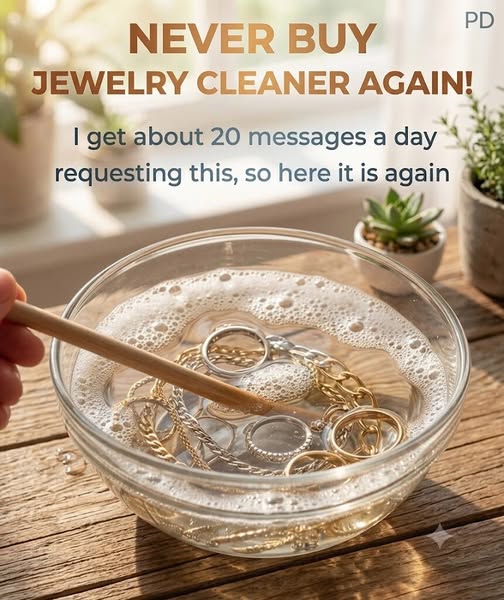
Carefully lower the jewelry into the solution.
The most important detail is ensuring that each piece touches the aluminum foil.
Direct contact allows the electrolytic reaction to occur efficiently.
If cleaning multiple pieces, try to arrange them so they do not overlap excessively.
Chains can be spread out gently.
Rings, bracelets, and earrings should remain fully submerged.
Once placed in the bowl, the process begins almost immediately.
Step Three: Let The Reaction Work
Patience is the easiest part of the process.
Allow the jewelry to soak for approximately five to ten minutes.
Heavily tarnished items may benefit from slightly longer soaking times.
During this period, you may notice:
- Small bubbles forming
- A slight odor similar to sulfur
- Changes in the appearance of the foil
- Gradual brightening of the jewelry
These are normal signs that the reaction is working.
Many people are surprised by how quickly results become visible.
Jewelry that looked dull for months can regain a significant amount of shine within minutes.
Step Four: Rinse Thoroughly
Once the soaking period is complete, carefully remove each piece.
The water may still be hot, so using a spoon or tongs is recommended.
Rinse every item thoroughly under cool running water.
This step removes any remaining residue and stops the cleaning process.
Pay particular attention to chains, clasps, and decorative details where solution may become trapped.
A thorough rinse ensures the jewelry remains clean and comfortable to wear.
Step Five: Dry And Polish
Use a soft, lint-free cloth to dry each piece carefully.
Rather than rubbing aggressively, gently pat and buff the surface.
As the jewelry dries, its renewed shine becomes increasingly apparent.
Many pieces appear dramatically brighter than they did before cleaning.
Silver often regains its reflective brilliance.
Brass frequently returns to a warm golden appearance.
German silver becomes noticeably cleaner and brighter.
Gold-filled pieces recover much of their original luster.
Important Safety Considerations
Although this method is generally safe, certain types of jewelry require additional caution.
Avoid prolonged soaking for:
- Pearls
- Opals
- Turquoise
- Coral
- Glued gemstones
- Costume jewelry with adhesive settings
Porous stones and glued components may react differently to heat and moisture.
When cleaning jewelry containing delicate gemstones, monitor the process closely and reduce soaking time if necessary.
If a piece is extremely valuable, antique, or fragile, professional evaluation may still be the safest option.
Why This Method Is So Popular
The popularity of this technique continues to grow because it offers several significant advantages.
First, it is affordable.
Commercial jewelry cleaners can be surprisingly expensive, especially when used regularly.
Second, it is convenient.
Most households already possess the necessary ingredients.
Third, it is effective.
Results are often visible within minutes.
Fourth, it avoids many of the harsher chemicals found in some commercial products.
Finally, it can clean multiple pieces simultaneously, saving time and effort.
For busy individuals, these benefits make home jewelry maintenance much easier.
Building A Regular Cleaning Routine
Jewelry generally stays in better condition when cleaned regularly rather than waiting until severe tarnish develops.
A simple monthly cleaning routine can prevent buildup from becoming excessive.
In addition to occasional deep cleaning, consider these habits:
- Store jewelry in dry environments.
- Remove pieces before swimming.
- Avoid direct contact with perfumes and lotions.
- Wipe jewelry gently after wearing.
- Keep silver pieces in anti-tarnish storage bags when possible.
These small steps can significantly extend the time between cleanings.
More Than Just Appearance
Cleaning jewelry is not solely about restoring shine.
Regular maintenance provides opportunities to inspect pieces carefully.
Many people discover loose stones, weakened clasps, worn links, or damaged settings during routine cleaning.
Identifying these issues early can prevent costly repairs or the loss of valuable jewelry.
A five-minute inspection today may save a treasured piece tomorrow.
A Simple Solution With Remarkable Results
In a world filled with expensive products promising extraordinary results, it is refreshing to discover that one of the most effective jewelry-cleaning methods relies on ingredients already sitting in most kitchens.
With baking soda, salt, dish soap, hot water, and aluminum foil, tarnished jewelry can often be transformed in just a few minutes.
The process is quick, inexpensive, and surprisingly satisfying.
More importantly, it helps preserve the beauty and sentimental value of pieces that often represent important memories, milestones, and relationships.
Sometimes the simplest solutions truly are the most effective.
And when it comes to restoring shine to silver, brass, German silver, and gold-filled jewelry, this homemade cleaning method proves that a little science and a few everyday ingredients can work wonders.