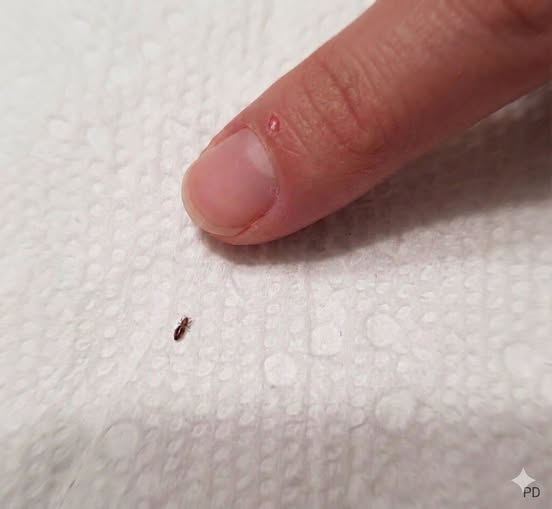
Finding a tiny bug in a toddler’s hair is enough to make almost any parent panic instantly. The moment a small crawling insect appears on a child’s scalp, especially one attending daycare or preschool, most parents immediately think the same terrifying word: lice.
That reaction is understandable.
Head lice are extremely common among young children, particularly those who spend time in daycare centers, preschools, and early elementary classrooms where close contact happens constantly. Children hug each other, share pillows during nap time, lean close together during story sessions, and often play in tightly packed groups. Because lice spread mainly through direct head-to-head contact, daycare environments naturally create ideal conditions for transmission.
Still, an important fact often gets overlooked in moments of panic: not every tiny bug found in a child’s hair is actually a head louse.
Many harmless insects occasionally end up in hair temporarily, especially active toddlers who spend time outdoors, roll around on carpets, cuddle stuffed animals, or play on daycare floors. Tiny beetles, gnats, fleas, mites, ants, or random outdoor insects can easily crawl onto clothing or hair without creating an infestation.
That is why identification matters far more than immediate panic.
Parents who instantly assume the worst sometimes begin aggressive treatments unnecessarily, exposing children to chemicals, stress, and extensive household cleaning before even confirming what the insect actually is. In reality, a single bug does not automatically mean a lice outbreak.
The first step is understanding what head lice really look like.
Head lice, scientifically known as Pediculus humanus capitis, are tiny parasitic insects that survive by feeding on small amounts of blood from the scalp. Adult lice are usually about the size of a sesame seed, roughly two to three millimeters long. Their color can vary from grayish-white to tan or reddish-brown depending on feeding status and lighting conditions.
Unlike many common insects, lice have a very distinctive body structure.
Their bodies are flat and oval-shaped rather than rounded or segmented like beetles. They possess six legs with specialized claw-like ends designed specifically for gripping human hair shafts. These claws allow them to move quickly through hair while staying firmly attached close to the scalp.
Importantly, lice cannot jump or fly.
This is one of the biggest myths surrounding them. Unlike fleas, which jump powerfully, lice simply crawl from one hair strand to another during close physical contact.
Another major clue involves eggs, commonly called nits.
Nits are tiny white, yellowish, or light brown oval specks attached firmly to individual hair strands near the scalp. Unlike dandruff or lint, they do not brush away easily because they are glued to the hair shaft by the female louse. Nits are usually found behind the ears, near the neckline, or around the crown of the head where warmth from the scalp supports incubation.
When parents discover an unknown bug, checking carefully for nits often provides more useful information than the insect itself.
In many situations, the insect found does not match the appearance of a louse at all.
Small beetles, for example, often have hard shell-like wing covers called elytra, giving them a more segmented or shiny appearance. Carpet beetles are another common source of confusion. While adult carpet beetles usually feed on fabrics or household materials rather than humans, their larvae sometimes wander indoors and alarm parents because of their unusual appearance.
Fleas are another possibility, especially in households with pets. Fleas are darker, compressed from side to side, and capable of jumping remarkable distances. Unlike lice, fleas usually bite ankles, legs, or exposed skin rather than remaining attached to scalp hair.
Mites are generally far too small to see clearly without magnification.
Environmental debris can also create false alarms. Seeds, lint, dried scabs, or tiny outdoor particles sometimes become tangled in hair and resemble insects during a quick glance.
Because of all this, experts recommend slowing down and performing a careful inspection before assuming infestation.
One of the best methods is wet combing.
Wet the child’s hair thoroughly and apply conditioner to make movement easier. Under bright lighting, use a fine-toothed lice comb and slowly comb from the scalp outward section by section. Examine the comb after each pass for live insects or attached nits.
If multiple lice or numerous nits are discovered, an infestation becomes much more likely.
However, if only a single unidentified bug is found without itching, redness, or additional evidence, the insect may simply be an accidental visitor rather than a parasite living on the scalp.
Daycare attendance certainly increases exposure risk.
Children in daycare environments experience far more close physical interaction than adults. Nap mats are placed side by side. Children hug during play. Costumes, hats, pillows, and stuffed toys may occasionally be shared despite hygiene rules.
Outbreaks are extremely common among preschool-aged children because younger kids naturally lack awareness about personal space and hygiene practices.
Still, modern medical organizations emphasize an important point many parents do not realize: head lice are annoying, but they are not dangerous.
Lice do not spread serious diseases. They are not associated with poor hygiene. They are not a sign of neglect or unclean living conditions. In fact, lice can affect families across every income level and cleanliness standard because the insects care far more about access to human hair than household cleanliness.
This is why many schools and daycare centers have moved away from strict “no-nit” policies.
Older policies often required children to remain home until every nit was removed completely. However, organizations like the American Academy of Pediatrics and public health experts now recognize that these policies created unnecessary stigma and missed educational time while doing little to stop outbreaks.
Most current recommendations allow children to return after treatment begins.
For parents, this shift is important emotionally as well as practically.
Many families feel embarrassed or guilty after discovering lice, believing it reflects bad parenting or poor hygiene. In reality, lice are largely a normal childhood nuisance associated with social interaction.
The emotional stress often becomes worse than the infestation itself.
Parents may suddenly begin washing every blanket, sanitizing toys obsessively, bagging stuffed animals, and vacuuming the entire house repeatedly. While some cleaning is helpful, experts caution against extreme reactions.
Lice survive poorly away from the human scalp.
They depend on body heat and blood meals for survival, meaning they usually die within one or two days away from a host. Nits also require scalp warmth to hatch successfully.
If lice are confirmed, cleaning should focus mainly on items that recently touched the head within the previous 48 hours. Bedding, hats, pillowcases, recently worn clothing, and hair accessories should be washed in hot water and dried using high heat.
Vacuuming carpets and upholstered furniture is reasonable, but pesticide sprays or fumigation products are unnecessary and potentially harmful.
Stuffed animals or non-washable items can simply be sealed in plastic bags for about two weeks.
Treatment itself has evolved considerably over time.
Traditional over-the-counter treatments containing permethrin or pyrethrin remain widely used and effective for many families. These products target live lice but may require a second application seven to ten days later because newly hatched lice can survive initial treatment if eggs remain viable.
Resistance has become an issue in some areas, however, leading some families to pursue alternative options.
Manual removal using high-quality metal lice combs remains one of the safest and most reliable approaches, especially for younger toddlers or children with sensitive skin. The process requires patience and consistency rather than harsh chemicals.
Professional lice-removal services have also become increasingly common.
These businesses specialize in combing, detection, and treatment assistance for overwhelmed families. While sometimes expensive, they can significantly reduce stress for parents struggling with repeated infestations.
Home remedies vary widely in effectiveness.
Mayonnaise, olive oil, coconut oil, vinegar, and essential oils have all been promoted online as lice cures, but scientific support for many of these methods remains weak or inconsistent. Some essential oils may also irritate sensitive skin or cause allergic reactions in children.
Experts generally recommend sticking to evidence-based treatments whenever possible.
Parents should also avoid treating household members who show no signs of infestation.
Preventive chemical treatment without evidence of lice increases unnecessary exposure and may contribute to treatment resistance. Instead, each family member should be inspected carefully and treated only if live lice or nits are found.
One challenge with toddlers is recognizing symptoms.
Older children may clearly complain about itching, but younger toddlers often cannot describe the sensation properly. Instead, parents may notice increased fussiness, poor sleep, scratching, scalp rubbing, or repeated touching around the ears and neck.
Interestingly, itching itself does not always appear immediately.
The itch is caused by an allergic reaction to louse saliva, meaning first-time infestations sometimes produce minimal symptoms for weeks. This is why routine head checks can be valuable for children attending daycare regularly.
Some parents attempt prevention using tea tree sprays, rosemary products, or hair braiding techniques. Evidence for these strategies is mixed, but keeping long hair tied back may reduce some opportunities for hair-to-hair transfer during play.
Communication with daycare providers also matters.
Responsible daycare centers typically notify families discreetly when lice cases appear so parents can monitor children at home. The best programs focus on calm education rather than fear-based reactions.
Good childcare environments understand that lice outbreaks are common and manageable.
Parents should feel comfortable asking about hygiene practices, nap-time spacing, cleaning routines, and illness communication policies. Most reputable centers already follow modern public health recommendations regarding lice management.
In some cases, repeated infestations may indicate overlooked sources.
Shared costume bins, improperly cleaned hair accessories, untreated family members, or incomplete nit removal can allow lice to persist longer than expected. Persistent cases may benefit from pediatrician evaluation or professional lice consultation.
Still, many situations involving a single bug turn out not to involve lice at all.
That is why identification remains the most important first step.
Parents often move immediately into crisis mode before confirming whether the insect even resembles a louse. Yet environmental bugs are extremely common in daycare settings where children interact with carpets, playgrounds, plants, blankets, and outdoor areas throughout the day.
A tiny beetle crawling briefly through hair is entirely possible.
The presence or absence of additional evidence usually tells the real story.
If no nits are visible, no itching exists, and repeated combing reveals nothing else, the situation may simply involve a random insect rather than a scalp infestation. Monitoring for a few days while continuing routine checks is often sufficient.
However, if live crawling insects continue appearing or numerous attached nits are found near the scalp, treatment should begin promptly.
Fortunately, most lice infestations are more frustrating than dangerous.
With proper combing, targeted treatment, and reasonable cleaning measures, families usually resolve the issue successfully within a couple of weeks. Children can continue normal social development and daycare participation with minimal disruption once treatment starts.
Perhaps most importantly, parents should remember that lice are a normal part of childhood for millions of families worldwide.
They do not reflect poor parenting, dirty homes, or neglect.
Children spread lice because children naturally play closely together. That same close contact also helps them build friendships, confidence, language skills, and emotional development.
In the end, finding a tiny bug in a toddler’s hair after daycare absolutely deserves attention—but not panic.
The insect may indeed be a head louse, especially in a group childcare environment. But it may also be a harmless stray bug with no medical significance at all. Careful inspection, calm observation, and evidence-based action matter far more than fear.
A flashlight, a fine-toothed comb, and patience will usually reveal the truth far better than panic ever will.